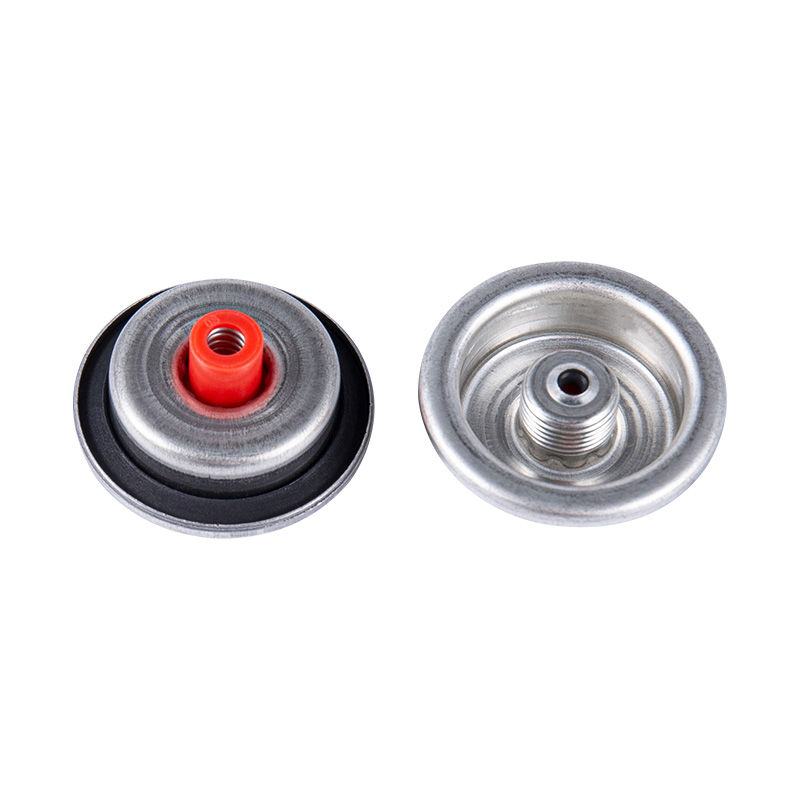
Anyone sourcing portable gas fittings usually recognizes the EN417 valve by sight long before they know its name. It's that small brass or steel fitting screwed into camping gas canisters — the one that clicks into a stove burner or outdoor heater in seconds. Behind that simple click, though, there's a fair amount of engineering deciding whether the connection holds gas safely for years or fails after a handful of uses.
Walk into any valve workshop and you'll find brass stock piled next to stainless bar — the two materials manufacturers reach for most often when producing EN417 valves, and each one earns its place for different reasons.
Brass cuts easily on a lathe. Tooling wears slower, cycle times shrink, and that translates into a friendlier price for buyers ordering in volume. It also holds up fine against everyday corrosion — humidity in a warehouse, a bit of condensation during shipping, nothing extreme.
Machining stainless steel takes more time and raises the cost per unit compared to brass. What it gains in return is resistance to salt air and chemical exposure that brass can't really compete with — which is often the deciding factor for distributors supplying coastal regions or areas with long, damp winters.
| Property | Brass | Stainless Steel |
| Machinability | Cuts easily, less tooling wear | Harder on tools, slower cutting speed |
| Corrosion resistance | Fine for normal storage and transport | Holds up well in humid or salty conditions |
| Relative material cost | Lower | Higher |
| Common fit | General outdoor and consumer use | Harsher climates, longer storage periods |
Exact alloy grades and any surface coating differ from one factory to the next, so it's worth checking these specifics against whatever standard applies in the destination market rather than assuming a default.
Open up an EN417 Valve and the core is the part actually doing the work. It's what opens and closes to control gas flow, and it's also what forms the seal when the canister connects to a burner or appliance. Get the machining slightly wrong here, and the valve can look completely normal on the outside while still leaking under pressure — a problem that often isn't obvious until the product is already in a customer's hands.
Dimensional tolerance is the first thing worth checking. If the core doesn't fit its seat within a tight range, gas finds a way around it, even when every other part of the valve looks fine. Surface roughness matters too. Smooth to the touch doesn't mean defect-free — magnification often reveals tiny ridges, and that's exactly where seals tend to fail first.
A few specific checks tend to separate careful machining from guesswork:
Roundness in particular plays a role that's easy to overlook — a core that's slightly out-of-round won't press evenly against the seal, so one side ends up bearing more pressure than the other, which speeds up wear. Over repeated use, this uneven pressure can also make the valve feel looser or less responsive when opening and closing, even if it still passes a basic leak check when new. That's part of why some manufacturers test cores after a simulated number of open-close cycles rather than only checking them fresh off the lathe — it gives a better picture of how the seal will hold up once the product is actually in use.
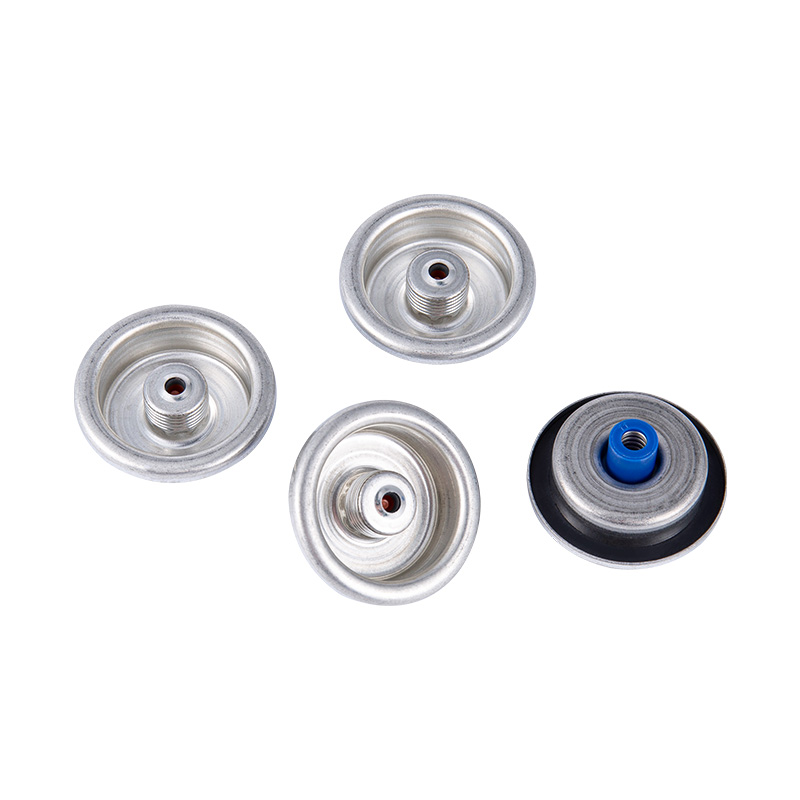
Anyone who's used a camping stove knows the small twist-lock canister that clicks into place before the burner lights. That connector is an EN417 valve, and most people never think about it — until it leaks, or won't seat properly against the burner head. What separates a valve that just works from one that keeps causing problems? Often it traces back to one step on the production line: turning.
Turning shapes the raw brass or zinc alloy stock into the finished valve body on a lathe. It's during this stage that the thread size, wall thickness, and sealing surface all get cut to spec. These aren't just numbers on a drawing — a sealing surface off by a fraction of a millimeter can mean gas escaping where it shouldn't, or a valve that fits some burner heads but not others. When a manufacturer runs CNC lathes with stable tooling and steady feed rates, the parts coming off the line stay within tolerance run after run. That consistency is exactly what buyers placing bulk orders are counting on — nobody wants batch three fitting differently than batch one.
So what should procurement teams actually look at when judging a supplier's turning quality? A few things tend to come up again and again:
For OEM and ODM buyers, there's a simple way to cut through supplier claims: ask for sample parts along with a dimensional inspection report. It's a low-cost step that reveals a lot before committing to a full production order. Suppliers willing to share process control data or third-party test results tend to be the ones worth building a longer-term sourcing relationship with — transparency here is usually a sign of a well-run operation.
Gas canisters don't stay in climate-controlled rooms. They get stored in garages through winter, tossed in car trunks in summer heat, and used outdoors in whatever weather shows up. That's why temperature testing has become a standard part of quality checks rather than an afterthought.
Cold exposure testing looks at how the rubber seals or O-rings behave once temperatures drop — rubber that stiffens in the cold can lose its ability to seal properly, even if it worked fine at room temperature.
Heat testing checks the opposite problem: whether materials expand or soften enough to affect the fit or the flow rate. Repeated cycling tests go a step further, checking whether an EN417 Valve still seals correctly after being connected and disconnected many times, since a single test at one temperature doesn't tell the whole story.


+86-18238070562

+86-579-85791578


No.28, Tongyi Road, Yiting town, Yiwu 322000 - Zhejiang Province, P.R.C.
Copyright © Bluefire Industries Limited All Rights Reserved. Two-Piece Aerosol Can


 English
 عربى
عربى Español