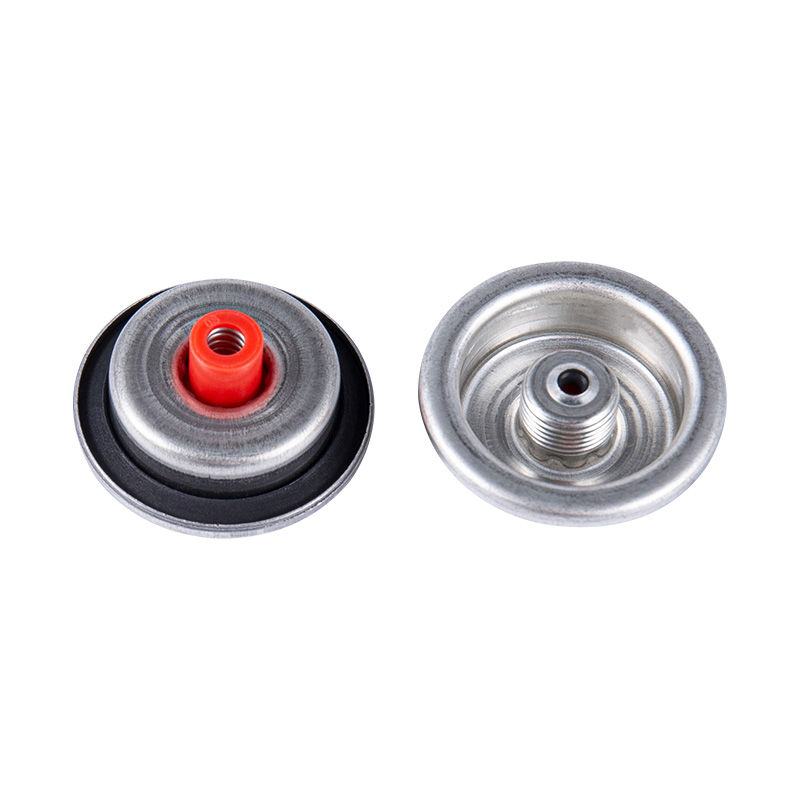
The EN417 valve did not start out as an industry standard — it got there slowly, as more manufacturers building camp stoves, lanterns, and portable heaters found that a shared thread spec made everything downstream easier. Today that same 7/16’-28 cartridge neck shows up across brands sold in Europe, Asia, and North America alike.
A few things drove that shift:
The seal inside an EN417 valve does not get much attention until it fails. For years, most valves used NBR rubber — a serviceable material that handled propane and butane without trouble but started showing its limits after heavy use or a winter in cold storage. Some users noticed that cartridges left in a car over the colder months would not seat as cleanly the following spring. The seal had taken a permanent set.
EPDM holds its elasticity to around −45°C, a range NBR rubber cannot match. For winter camping or high-altitude trips, that gap is real — a stiffened seal leaves small gaps at the contact surface, and small gaps in a gas valve are a problem worth avoiding.EPDM holds its elasticity further into the cold, which means the stove works from the first try rather than requiring the user to warm the cartridge in a jacket pocket first.

The seal material matters, but so does the metal it presses against. The valve stem — the slender component that opens the gas path when a regulator or appliance engages — needs to be dimensionally consistent across every unit coming off the line. A stem that is even slightly out of round, or whose thread pitch drifts toward the end of a long production run, puts uneven stress on the seal and wears it down faster than it should go.
The shift to CNC machining shows up in the numbers. Thread pitch on current EN417 stems holds to around ±0.008 mm — older production lines ran at ±0.03 mm. Stem concentricity matters too, since any misalignment pushes unevenly on the seal and wears it faster on one side. The material is typically treated brass alloy, chosen because these valves spend years in wet bags and damp garages and still need to hold their shape.
| Machining Metric | Conventional Production | Precision CNC Production |
| Stem diameter tolerance | ±0.05 mm | ±0.01 mm |
| Thread pitch accuracy | ±0.03 mm | ±0.008 mm |
| Surface roughness (Ra) | 1.6–3.2 µm | ≤ 0.8 µm |
| Batch consistency (Cpk index) | ~1.0 | ≥ 1.67 |
Outdoor cooking and portable heating are not going away, and neither is the EN417 valve. Incremental improvements in materials and machining precision are stretching its useful life and making it a more dependable option across a wider range of field conditions — which is probably enough to keep it relevant for a good while yet.


+86-18238070562

+86-579-85791578


No.28, Tongyi Road, Yiting town, Yiwu 322000 - Zhejiang Province, P.R.C.
Copyright © Bluefire Industries Limited All Rights Reserved. Two-Piece Aerosol Can


 English
 عربى
عربى Español