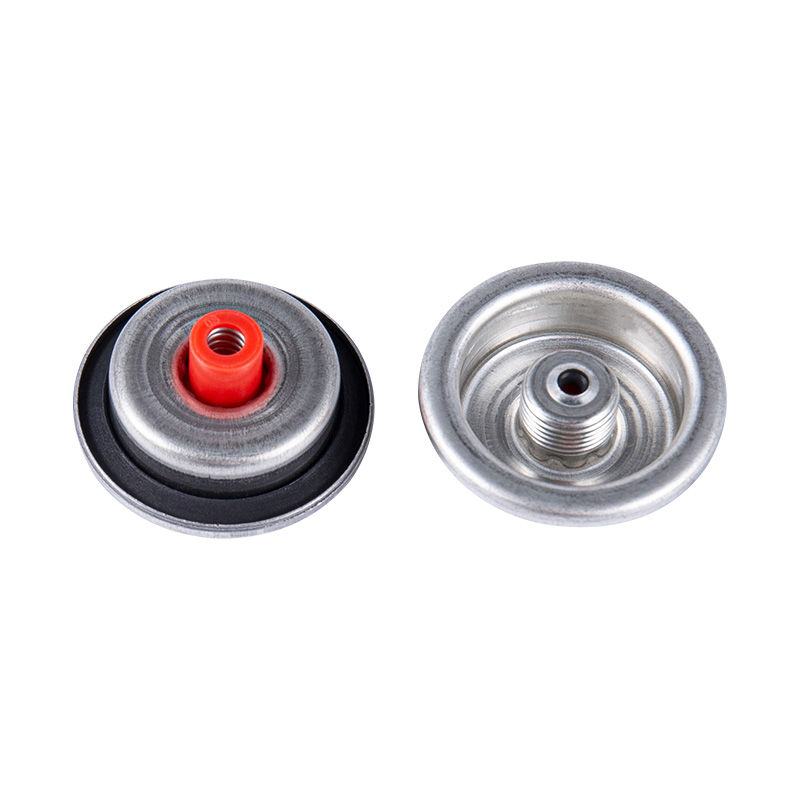
The internal geometry of an aerosol valve body has always influenced spray behavior. What's changed is how precisely that geometry can now be engineered. Microfluidic channel structures — microscale networks of channels, chambers, and bifurcation points built directly into valve components — give formulators a much finer degree of control over how liquid and propellant mix before they ever reach the nozzle.
In practice, this matters because inconsistent mixing upstream of atomization is one of the main reasons spray cone angles drift and droplet size distributions widen over a can's lifetime. Microfluidic design addresses that at the source. Pressure-equalizing chambers within the valve body help maintain consistent output even as fill level drops — a long-standing frustration for products that need to perform identically from the first use to the last.
What microfluidic aerosol valve design brings to the table:
The spring inside an aerosol valve does three things: it opens the valve under actuation force, holds the seal when the valve is at rest, and reseats reliably after each dose. None of these tasks are complicated in isolation. The problem is repeatability across hundreds of production batches — and tens of thousands of actuations per unit.
Standard springs have historically been manufactured with tolerances wide enough that actuation force can vary by ±18% across units in the same production run. For a consumer hairspray, that's barely noticeable. For a metered-dose inhaler delivering a specific drug quantity, it's a compliance problem. Precision spring engineering — tighter wire diameter tolerances, defined coil pitch consistency, and alloy selection based on elastic modulus rather than just cost — has brought that variance down sharply.
| Spring parameter | Standard spec | Precision spec | Change |
| Wire diameter tolerance | ±0.02 mm | ±0.005 mm | 75% tighter |
| Actuation force variance | ±18% | ±5% | 72% narrower |
| Valve reseating speed | ~35 ms | ~12 ms | 65% faster |
| Service cycle life | ~15,000 cycles | ~28,000 cycles | 87% longer |
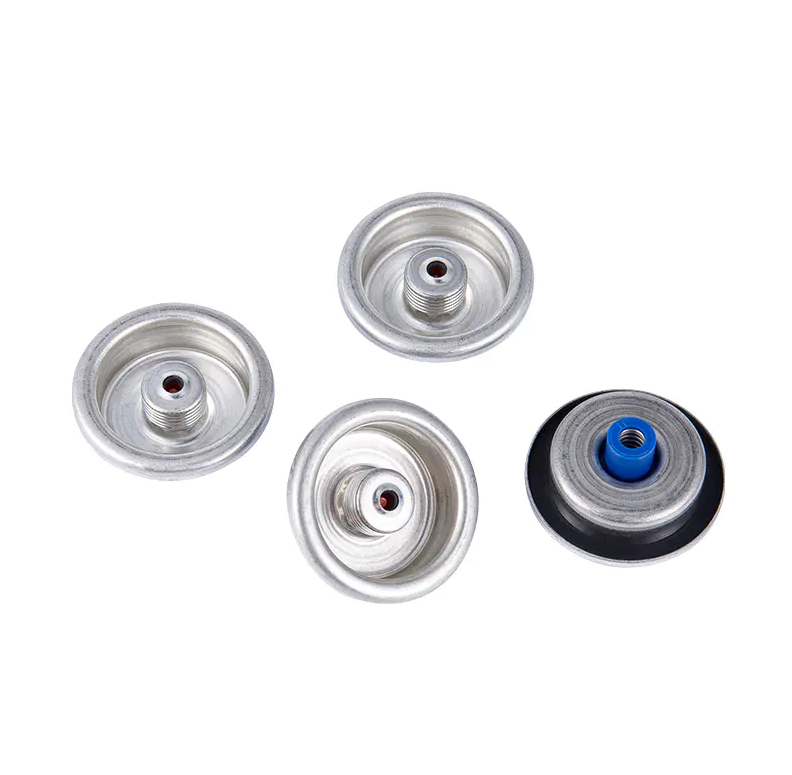
Droplet size is one of those specs that sounds academic until you trace what it actually affects. In inhalation therapy, it determines how deep a drug particle penetrates into the airway. In cosmetic sprays, it governs whether a product feels like a fine mist or a wet blast. In agrochemical applications, it controls coverage per unit of active ingredient. Nano-nozzle technology — orifices machined at sub-100-micron scales — shifts all of these outcomes in a useful direction.
Standard drilled orifices tend to produce Dv50 droplet sizes in the 80–120 µm range, with meaningful variation across the spray cone. Nano-nozzle designs bring that figure down to 20–45 µm, and they do so with notably tighter velocity distribution across the full spray pattern.
Side-by-side: standard orifice vs. nano-nozzle atomization
The production challenge has always been consistency. Holding a sub-50-micron orifice geometry across millions of aerosol valve units per production run is genuinely difficult. Laser micro-machining and electroformed metal mesh fabrication have both improved enough in recent years that this is becoming a solvable engineering problem rather than a cost-prohibitive one.


+86-18238070562

+86-579-85791578


No.28, Tongyi Road, Yiting town, Yiwu 322000 - Zhejiang Province, P.R.C.
Copyright © Bluefire Industries Limited All Rights Reserved. Two-Piece Aerosol Can


 English
 عربى
عربى Español